By
Gustav Haaland
-
When collateral can't be insured — what the insurance gap means for credit risk
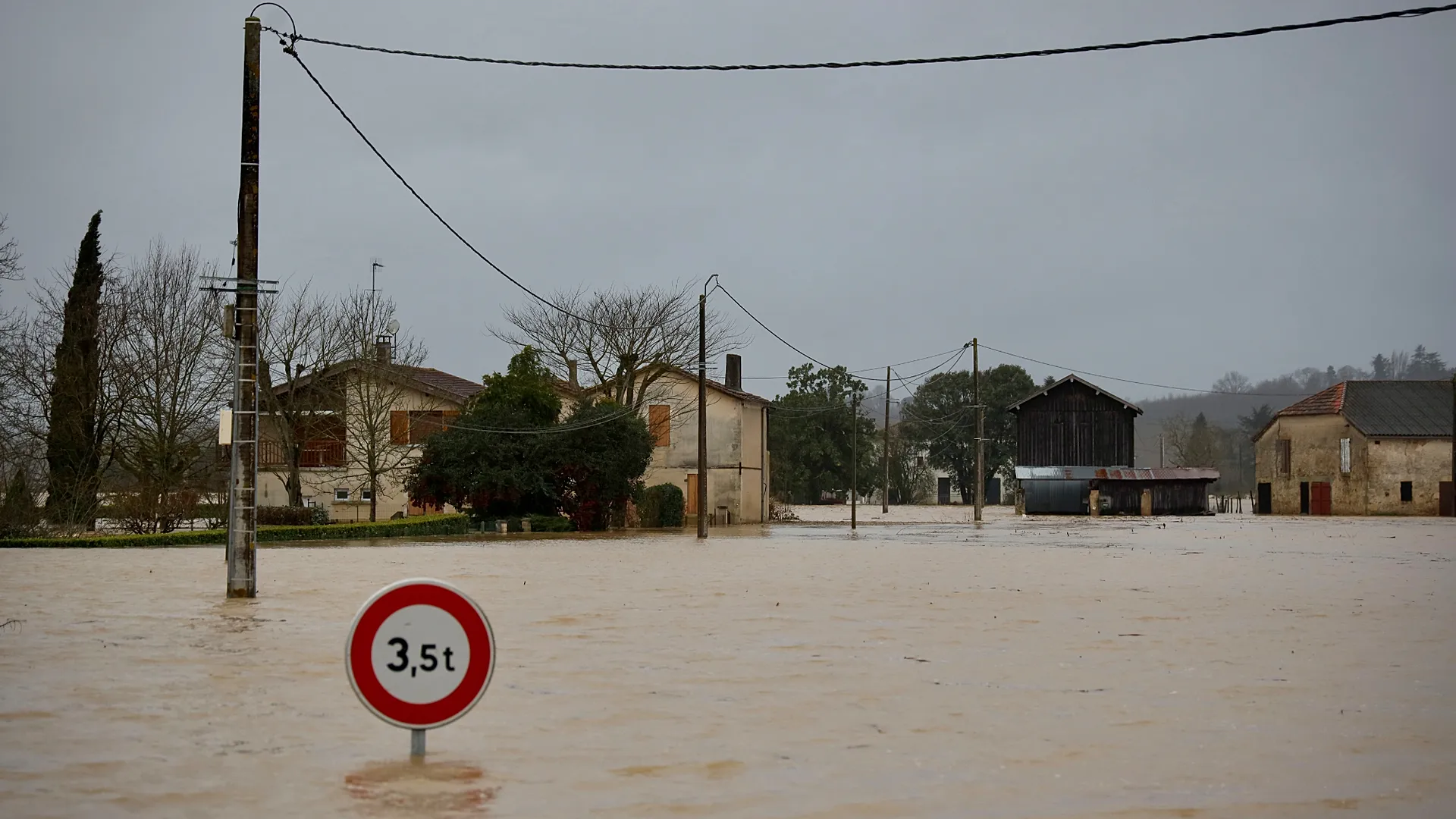
Bank lending rests on a quiet assumption: that collateral can be protected. When that assumption holds, credit risk is manageable. When insurance availability weakens, the entire logic of lending starts to shift — not dramatically, but gradually, in ways that traditional credit frameworks are not designed to detect.
Insurance is not peripheral to credit risk. It is one of its foundations. Mortgages assume homes can be insured. Project finance assumes infrastructure can be covered. Commercial real estate loans assume operational continuity after shocks. As the insurance gap widens, these assumptions are coming under pressure across exposed markets.
Insurance availability is now a credit risk factor
The insurance protection gap describes the growing share of losses that are either uninsured or underinsured. As climate-related hazards intensify and natural buffers degrade, the ability to transfer risk through insurance is becoming more constrained.
For banks, the transmission mechanism is direct. If an asset becomes difficult or expensive to insure, its liquidity declines. If liquidity declines, collateral values become more volatile. If collateral values become uncertain, credit risk rises.
This does not require a complete withdrawal of coverage. It can begin with tighter exclusions, higher deductibles, narrower policy terms, or non-renewals. Banks may not experience this as a sudden shock. They experience it as gradual deterioration in credit quality.
The protection gap therefore becomes a leading indicator of future credit stress — and one that most credit models are not yet designed to track.
The scale of uninsured losses is structural, not cyclical
Recent data makes clear that the insurance gap is not a temporary market condition. According to the WWF report Tackling the Insurance Protection Gap, the annual gap between total economic losses and insured losses averaged €59 billion per year in the European Union (2021–2023) and US$64 billion per year in the United States (2021–2024).
These figures do not reflect isolated disaster years. They reflect structural uninsured exposure that is accumulating across portfolios, regions, and asset classes. When losses are uninsured, they do not disappear. They migrate — to households, to governments, and to the banks that financed the affected assets.
Mortgage portfolios carry hidden insurance exposure
The link between insurability and mortgage markets is direct and underappreciated. If coverage becomes unaffordable or unavailable, refinancing becomes harder. If refinancing becomes harder, distressed sales increase. If distressed sales increase, prices adjust — and collateral values follow.
This dynamic may emerge gradually rather than dramatically. But even incremental tightening of insurance conditions can alter refinancing assumptions and credit committee decisions. A mortgage portfolio concentrated in flood-prone or wildfire-exposed areas is no longer only exposed to weather events. It is exposed to insurance market capacity and the affordability of risk transfer.
Credit models that assume stable insurability may be underestimating the structural change already underway.
The systemic feedback loop
One of the clearest warnings in recent research on the insurance gap is the risk of a systemic feedback loop. As insurance coverage declines or becomes unaffordable, a larger share of disaster losses is absorbed by households and governments. Public budgets carry greater reconstruction and compensation burdens. Fiscal space shrinks. Investment in resilience may decline. Risk increases further.
WWF also notes that growing disaster-related expenditures and contingent liabilities can strain sovereign balance sheets and potentially affect borrowing costs. Banks sit within this system — exposed not only to individual assets, but to the broader fiscal and macroeconomic environment in which those assets operate.
European regulators are already treating this as a systemic concern. In December 2024, EIOPA and the European Central Bank jointly proposed an EU-level approach to reduce the economic impact of natural catastrophes, explicitly citing the risk of losses shifting to banks, governments, and households as insurance coverage contracts.
Credit frameworks need to reflect insurance dependency
For banks, the strategic question is no longer whether climate risk matters. It is whether credit frameworks fully reflect the dependency on insurability.
Insurance capacity has long been treated as a given in underwriting, collateral assessment, and stress testing. The growing protection gap suggests it can no longer be assumed. Banks that integrate insurance availability into their credit risk frameworks — at the asset level, not just the portfolio average — will be better positioned to identify deterioration before it becomes loss.
When insurance weakens, credit logic must adjust — and so must the way real estate owners approach asset management and risk mitigation.
Sources and references
WWF (2026). Tackling the Insurance Protection Gap – Focus on Advanced Economies. (Annual protection gap figures: EU €59 billion/year (2021–2023); US $64 billion/year (2021–2024); systemic transmission and mortgage implications.)
European Insurance and Occupational Pensions Authority (EIOPA) — Insurance protection gap for natural catastrophes (dashboard) https://www.eiopa.europa.eu/tools-and-data/dashboard-insurance-protection-gap-natural-catastrophes_en
EIOPA & European Central Bank (2024) — A European approach to reduce the economic impact of natural catastrophes https://www.eiopa.europa.eu/eiopa-and-ecb-propose-european-approach-reduce-economic-impact-natural-catastrophes-2024-12-18_en
European Central Bank (ECB) — Climate-related risks and financial stability https://www.ecb.europa.eu/ecb/climate/climate/html/index.en.html


Get the newsletter
Climate risk trends, product updates, and the methodology behind the numbers, straight to your inbox.
