By
Gustav Haaland
-
Norway's weather damage bill has tripled. Finans Norge's 2026 report tells us why
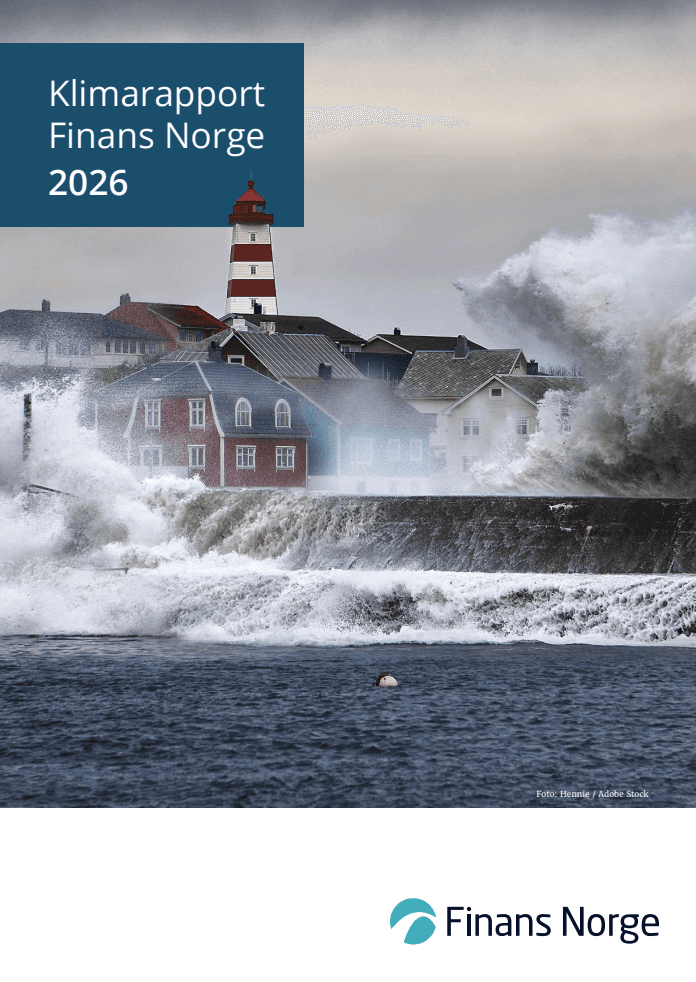
Finans Norge published their annual Climate Report this month, and the numbers demand attention. Over the past ten years, Norwegian insurers paid out NOK 42.3 billion in weather and natural disaster claims on buildings and contents. The three most expensive years in that decade were 2023, 2024 and 2025 — in that order.
This is not a statistical anomaly. It is a trend, and it is pointing in one direction.
Extreme weather is no longer the exception
The report draws on damage data from across Norway's insurance industry, covering storms, floods, landslides, stormwater and frost. What the data shows, consistently and across every category, is that extreme weather events are becoming more frequent, more intense and more costly.
2025 was the warmest year ever recorded in Norway — 1.5 degrees above the 1991–2020 average, with every single month above normal. That has never happened before. Hans Olav Hygen at the Norwegian Meteorological Institute, writing in the report, notes that Norway could see temperatures rise by up to 3.5 degrees over this century if global emissions are not cut. A warmer climate means more intense rainfall, more rapid snowmelt, more frequent freeze-thaw cycles, and stronger storms reaching further inland than before.
Storm Amy in October 2025 illustrated this clearly. The storm hit large parts of southern Norway, with gusts reaching 62 metres per second in inland Trøndelag — a region not historically associated with extreme storm damage. Around 18 000 claims were filed, with total payouts of approximately NOK 1.8 billion. A normal October averages around NOK 130 million in weather-related claims. Amy was not a coastal event in the traditional sense, and that matters.
The damage costs are compounding
Total weather-related insurance payouts in the five-year period 2021–2025 reached NOK 26.2 billion. In the preceding five years, 2016–2020, the figure was NOK 16.1 billion. That is a 60% increase, and it spans almost every damage category — storm, flooding, water ingress and stormwater are all rising.
Nearly half of all claims over the past decade — 46% — stem from water ingress and drainage backflow. These are predominantly urban stormwater events: intense, short-duration rainfall overwhelming drainage systems that were built for a climate that no longer exists. As the report notes, about 100 insurance policyholders are affected by water and drainage damage every single day. Repairs typically take months, because buildings must dry out first.
The geographic picture is equally striking. Inland counties like Oppland, which were historically considered lower-risk, have seen a sharp rise in claims — largely driven by extreme events like Hans in 2023. Norges Bank estimated in 2025 that approximately 13% of Norwegian homes lie in areas particularly exposed to weather and natural hazards.
The data exists. The gap is in acting on it
One of the most important parts of the Finans Norge report is what it says about data and prevention. Norway's insurance industry has been delivering monthly, address-level claims data to DSB's national knowledge bank since 2022. In March 2026, DSB launched a significantly improved version of the platform with monthly updates — a genuine step forward.
The data is there. Insurers have been building it, sharing it and improving it for years. It reflects where damage has actually occurred, which structures have been hit, which areas flood repeatedly. That is valuable. But it is also, by nature, backward-looking. It tells us where water has been — not always where it will go next.
The financial sector — banks, insurers, real estate — is increasingly aware of this. Physical climate risk is moving from sustainability reports into credit decisions, underwriting models and portfolio management. The direction of travel is right. But as the report makes plain, the gap between the scale of the problem and the pace of the response is still wide.
In 2025, the government allocated NOK 782 million to NVE for flood and landslide prevention. In the same year, the insurance industry paid out NOK 5.3 billion in weather-related claims. That ratio tells its own story.
The case for moving faster
Finans Norge is direct in their recommendations: prevention budgets need to increase significantly. Municipalities need more resources and better tools. The knowledge bank needs to be used actively in risk and vulnerability analyses. And responsibility for climate adaptation needs to be clearer across government levels.
We would add one thing: the financial institutions that manage exposure to physical assets — banks with mortgage portfolios, insurers pricing risk, real estate funds making acquisition decisions — need better tools to translate what the data is telling us into forward-looking, property-level analysis. The cost of inaction is no longer theoretical. It is documented, year by year, in the claims data that Finans Norge publishes every spring.
The 2026 report is well worth reading in full. The trajectory it describes leaves little room for delay.
Sources
Finans Norge: Klimarapport 2026, https://www.finansnorge.no/klimarapport
Norges Bank: Climate risk analysis, 2025
Munich Re: Natural catastrophe statistics, 2025