By
Gustav Haaland
-
When nature becomes a balance sheet issue
Why hollow oaks and peatlands matter for real estate and financial risk
Biodiversity loss is often framed as an environmental concern. In practice, it is increasingly a financial and regulatory risk — not only for real estate owners and developers, but also for the banks that finance them.
In Norway, two nature types illustrate this shift clearly: hollow oak trees and peatlands. Both are legally protected and increasingly mapped by authorities. When constraints are identified late, projects may be delayed, redesigned, or constrained, with direct implications for asset value and financing assumptions.
For decision-makers across real estate and finance, this is no longer about biodiversity reporting. It is about permitting risk, development feasibility, collateral value, and long-term portfolio resilience.
Hollow oaks: small footprints, large consequences
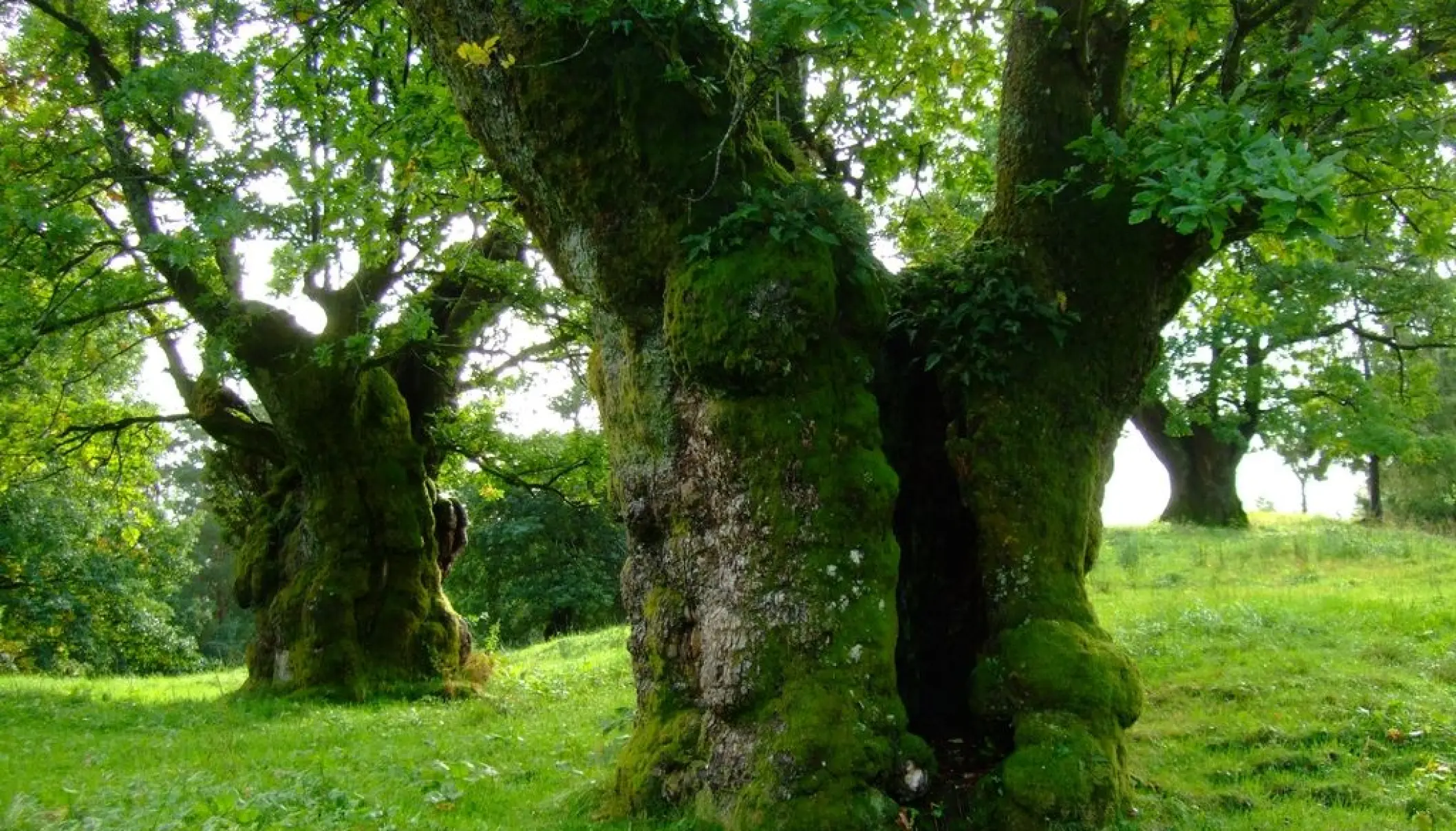
Hollow oaks are among the most biodiversity-rich habitats in Norway. As oak trees age, cavities form in the trunk and branches, creating microhabitats for insects, fungi, lichens, birds, and bats. A large number of specialised species are associated with these trees, including several red-listed species.
Because of their ecological importance, hollow oaks can be classified as a selected nature type under Norwegian law. Whether a specific tree is covered depends on location, size, and mapping criteria.
For real estate projects, this creates a clear risk dynamic. Where hollow oaks are protected, restrictions may apply to surrounding land use, including buffer zones that limit construction, excavation, or drainage changes. When identified late, projects may require redesign, reduced scope, or delays while additional assessments are completed.
In practice, this can mean:
Zoning proposals that must be revised
Site layouts adjusted to respect protection zones
Timelines that shift while permitting issues are clarified
Financially, this introduces:
Increased planning uncertainty
Higher project and holding costs
Delayed cash flow
Reduced predictability in development potential
The issue is not the presence of hollow oaks, but when the constraint becomes visible. Early identification allows risk to be managed. Late discovery turns biodiversity into a balance sheet issue.
Peatlands: biodiversity risk that compounds into climate and flood risk
Peatlands cover a relatively small share of Norway's land area but play an outsized role in biodiversity, climate regulation, and water management.
Over past decades, a significant share of Norwegian peatlands has been lost due to drainage, cultivation, and development. This creates three interconnected risk dimensions.
Biodiversity loss
Peatlands host specialised species that cannot survive elsewhere. Several peatland nature types are listed on Norway's red list. Drainage or construction can permanently degrade these ecosystems.
Climate risk
Peatlands are effective carbon stores. When drained, stored carbon is released as greenhouse gases, turning a carbon sink into a long-term emission source and increasing regulatory and transition risk for projects on or near peat soils.
Flood and water management risk
Intact peatlands absorb and slowly release water. When degraded, runoff increases and flood peaks can rise downstream. Development on or near peat soils may therefore influence flood exposure beyond the site itself, affecting insurance conditions, maintenance costs, and long-term resilience. Learn more about how Telescope maps physical hazards like flooding and landslide.
Regulation is tightening — and expectations are shifting
Norway has introduced a ban on new cultivation of peatlands, and proposals to further restrict peatland development have been subject to public consultation. While exemptions remain, the direction signals increasing caution.
Banks, insurers, and investors increasingly assess biodiversity alongside physical climate and transition risk. Assets exposed to sensitive nature types may face higher scrutiny, particularly where development feasibility is uncertain.
In practice, biodiversity is becoming part of:
Zoning and permitting risk
Credit risk assessments
Insurance availability and terms
Long-term valuation assumptions
Ignoring these factors does not remove risk. It postpones when it appears.
Why banks care: when biodiversity enters the credit process
For banks, biodiversity risk rarely appears as an abstract topic. It tends to surface during credit execution.
A common scenario is straightforward. A property appears sound. The financial model works. The loan is approved. Then, during permitting, a protected nature feature — such as a hollow oak — is identified. At that point, the risk profile changes. Buildable area may shrink. Timelines shift. Expected cash flows are delayed. In some cases, development plans must be revised. For the bank, this affects both execution risk and the value of the collateral securing the loan.
This dynamic extends beyond hollow oaks. A recent case in Trondheim illustrates how land-use expectations can shift abruptly. In a "planvask" process, the municipality prioritised agricultural protection over assumed development expectations. Developers claimed more than NOK 2.5 billion in compensation for lost profit, but did not succeed in court. The legal outcome is one thing. The financial loss is substantial.
When authorities reassess land-use priorities, expected development value may not materialise. For lenders, this directly affects collateral assumptions and long-term credit exposure. Peatlands present a related challenge: development on or near peat soils can increase long-term flood risk, influence insurance terms, and weaken asset resilience.
As a result, biodiversity and land-use constraints are increasingly linked to:
Project completion risk
Collateral volatility
Insurance availability and pricing
Long-term credit risk
Several lenders note that these constraints tend to surface too late — after value assumptions have already been made. See how banks use Telescope to screen climate and biodiversity risk early in the credit process.
From late surprises to early screening
The challenge is not willingness, but timing. When you discover constraints late, they are hard to price and explain in credit committees. When identified early, they can be reflected in project design, loan structure, or pricing.
This is why biodiversity is increasingly treated like flood and landslide risk: something to screen early, not explain later. Hollow oaks and peatlands then become part of a predictable risk landscape that borrowers and lenders can work with.
What we see in practice
At Telescope, biodiversity risk most often becomes costly when identified too late. Projects that appear viable in early models can lose momentum once protected nature types surface during permitting. Organisations that manage this well screen assets and development areas early, combine biodiversity data with physical climate and transition risk, and use that insight to guide decisions. The result is not fewer projects, but fewer surprises.
Because in real estate and banking alike, the most expensive risks are rarely the ones you cannot predict. They are the ones you chose not to look for.
See how Telescope maps biodiversity risk — or book a meeting to see it in context for your portfolio.
Sources and references


Get the newsletter
Climate risk trends, product updates, and the methodology behind the numbers, straight to your inbox.
